Jun 3, 2026 / Blog / 6 min read
SEO vs AIO: What Businesses Need To Understand Before Search Changes Again
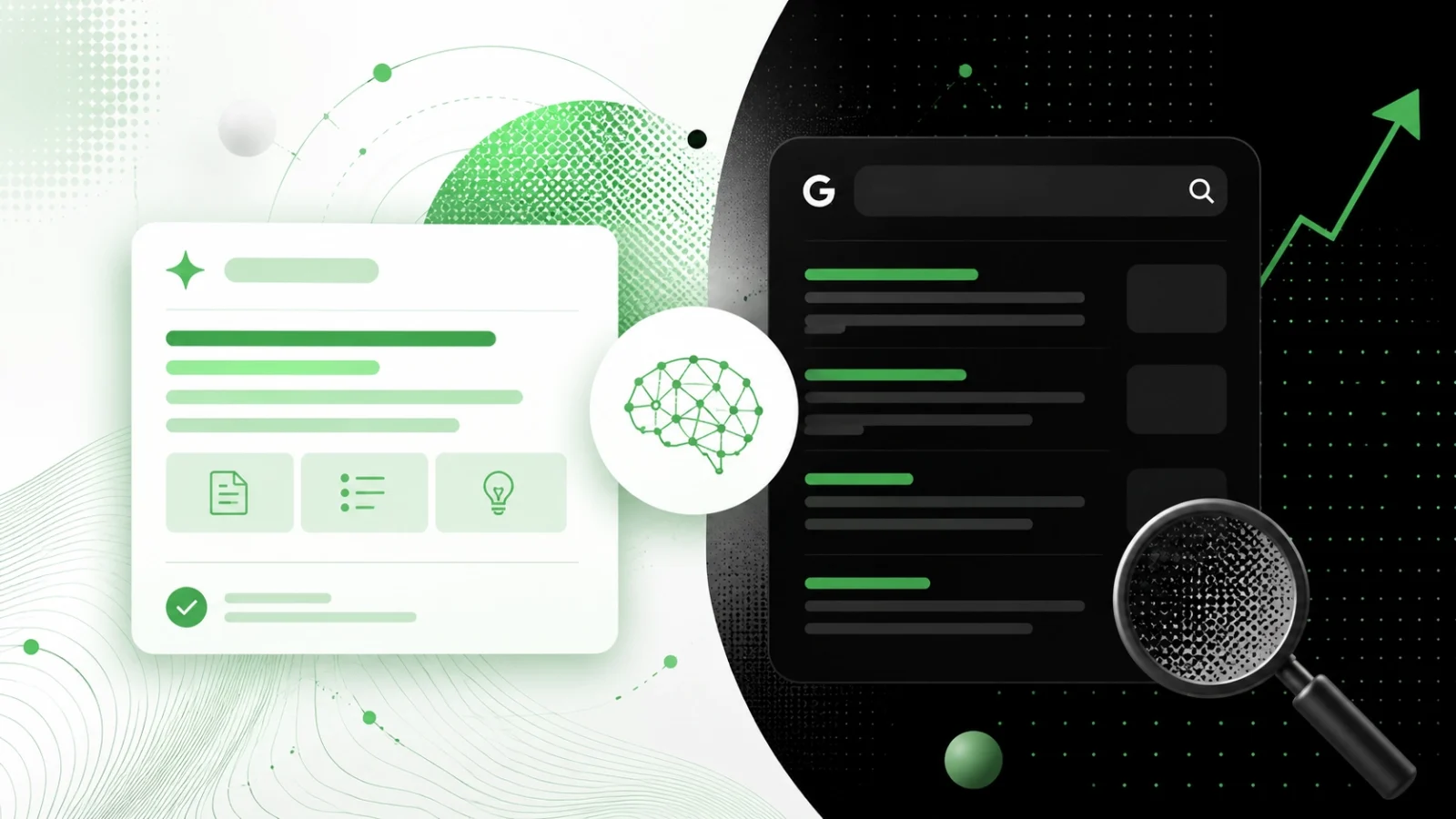
Search is not disappearing, but the way people find businesses is starting to change. For years, SEO was mostly about getting a website to rank in Google’s regular search results. That still matters, but AI-powered search has added a new layer businesses can no longer ignore.
AIO, or AI Optimization, is about making your website clear, useful, and trustworthy enough to be understood by AI search systems. The goal is not just to rank anymore. The goal is to become the kind of source Google can confidently use, summarize, and point people toward when people ask more detailed questions.
SEO Still Matters, But It Has To Work Harder Now
SEO, or Search Engine Optimization, is the process of improving a website so search engines can understand it and users can find it. This includes technical SEO, fast loading pages, clean site structure, helpful content, internal links, strong service pages, and trustworthy signals around your brand.
These basics are still important. A website still needs to be crawlable, indexable, and useful before it can perform well in search. AI search does not remove that requirement. In fact, it makes weak SEO more obvious because vague pages give search engines very little to work with.
A business page that only says “we offer quality digital services” is not strong enough anymore. It does not explain the service, the audience, the process, the outcome, or why the business should be trusted. Modern SEO needs more depth because search engines are trying to understand meaning, not just match keywords.
This is where many businesses fall behind. They build websites that look professional, but the content does not clearly answer what customers are actually searching for. A good-looking website can still fail if Google cannot understand its purpose or if users leave without knowing what to do next.
What AIO Means For Business Websites
AIO stands for AI Optimization. In simple terms, it means preparing your website for AI-powered search experiences, including AI Overviews, AI Mode, and other answer-based search results.
AI search works differently from traditional search because it often gives users a direct answer first. Instead of only showing a list of links, Google may summarize information from different sources and then show supporting links. This means your content needs to be clear enough for both people and search systems to understand quickly.
For businesses, AIO is not about tricking AI. It is about removing confusion. Your website should clearly explain what you do, who you help, what problems you solve, how your process works, and what makes your service different.
A weak SEO page might say, “We provide advanced digital marketing solutions for businesses.” A stronger AIO-friendly page would explain the actual service in plain language: “We build search-first websites for service businesses that need more qualified leads from Google. Our process includes technical SEO, content planning, conversion-focused design, and clear service pages built around customer intent.”
The second version gives search engines more context. It also gives potential customers a better reason to trust the business.
The Real Difference Between SEO And AIO
The easiest way to understand the difference is this: SEO helps your website get found, while AIO helps your content get understood.
SEO focuses on visibility. It asks whether your website can rank, whether your pages are optimized, whether your content matches search intent, and whether your site has enough authority to compete. AIO focuses on clarity. It asks whether your content is specific, useful, structured, and credible enough to be used in AI-generated answers.
The simple breakdown looks like this:
- SEO improves how your website appears in search.
- AIO improves how your website is understood by AI-powered search.
- SEO focuses on rankings, indexing, keywords, links, and technical health.
- AIO focuses on clarity, context, usefulness, structure, and trust.
Both are connected. You cannot ignore SEO and expect AIO to save you. If your website is slow, messy, thin, or poorly structured, AI search will not magically turn it into a trusted source. At the same time, ranking alone may not be enough if your content is generic and easy to replace with a short AI summary.
This is why businesses need to stop treating SEO and AIO as separate trends. A strong search strategy now needs both. SEO builds the foundation. AIO improves how clearly your expertise is understood.
Why Generic Content Is Becoming A Bigger Problem
AI search makes average content less useful. If a blog post only repeats basic information already available everywhere, users may get the answer directly from AI search and never click through. This is a serious issue for businesses that rely on shallow articles just to fill their blog.
The content that still has value is the content that adds something specific. That could be original insight, real examples, service comparisons, pricing context, local expertise, process breakdowns, case studies, or practical explanations based on experience.
This matters because AI search rewards clarity and usefulness. A page that explains a topic better than competitors has a better chance of being understood, referenced, and trusted. A page that says the same thing as every other website gives users and search engines no strong reason to choose it.
Businesses should not publish content just because a keyword has search volume. They should publish content because it answers a real question better than what already exists.
How Businesses Should Prepare For SEO And AIO Together
The best approach is to build a website that serves both traditional search and AI-powered search. That starts with strong technical SEO, but it does not end there.
Service pages should explain the problem, the solution, the process, the expected outcome, and the next step. Blog posts should support those service pages by answering customer questions, comparing options, explaining industry terms, and guiding users toward a decision.
Businesses should also use clear headings, simple explanations, internal links, FAQs where useful, structured data when it matches the page, specific service details, proof, examples, and strong calls to action. The goal is not to overload the page with SEO tricks. The goal is to make the content easier to understand.
A strong SEO and AIO strategy should answer three questions clearly: what does this business do, who is this service for, and why should someone trust this business over another option? If a website cannot answer those questions clearly, it is not ready for the next stage of search.
Final Thoughts
SEO is not dead, and AIO is not a replacement for it. The real change is that search is becoming more selective. Businesses now need websites that are technically strong, easy to understand, and genuinely useful.
SEO helps a business appear in search. AIO helps that business make sense inside AI-powered search results. The companies that prepare for both will have a stronger chance of staying visible as Google becomes more conversational, answer-focused, and harder to fool with generic content.
For businesses, the next move is simple: stop building websites that only look good and start building websites that explain, rank, and convert. That is where search is heading, and that is where serious brands need to be before their competitors catch up.
Need This Applied To Your Site?
WeRankStudio can turn the same thinking into a practical SEO, content, and conversion system for the business.
Start A Project →